

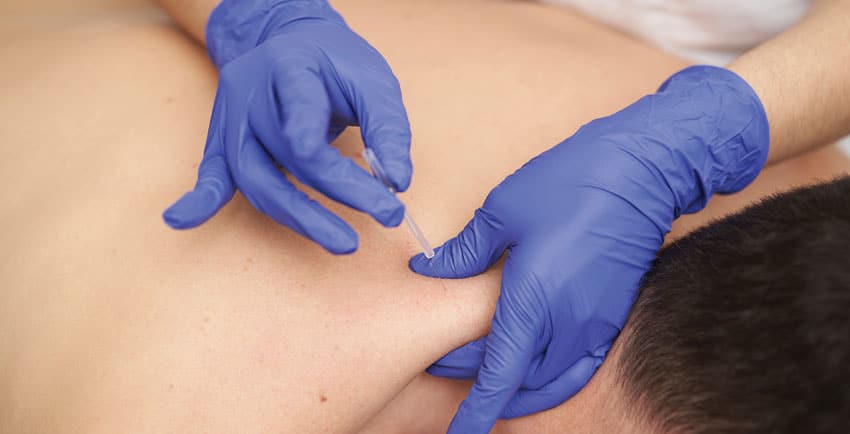
Understanding Integrative Dry Needling
A Modern Approach to Pain Relief and Recovery
Integrative Dry Needling (IDN) is an increasingly popular and highly effective treatment used to address a wide range of neuromusculoskeletal conditions. Rooted in modern anatomy and scientific research, IDN is designed to relieve pain, restore movement, and improve overall function—without medication.
Unlike traditional acupuncture, which is based on Eastern medicine principles, dry needling is grounded in Western medical science. It focuses on the relationship between muscles, nerves, and connective tissue. During treatment, a trained clinician inserts a very thin, sterile filament needle into targeted areas of the body—often where there is inflammation, tightness, or “trigger points” causing pain.
This process creates a small, controlled micro-lesion in the affected tissue. While that may sound intense, it actually stimulates the body’s natural healing response. Blood flow increases, tight muscles begin to release, and the inflammatory process is regulated. At the same time, the nervous system is influenced in a way that helps reduce pain signals. Together, these effects create an environment where the body can repair itself more efficiently.
The benefits of dry needling can be both immediate and cumulative. Many patients report decreased pain, improved flexibility, increased strength, and better overall function in daily activities. It is commonly used to treat conditions such as neck and back pain, shoulder injuries, tennis elbow, carpal tunnel syndrome, headaches (including migraines), jaw pain, sciatica, and muscle strains or tightness in the legs.
A key factor in the effectiveness of IDN is the clinician’s training. Practitioners undergo extensive education not only in identifying tight or painful tissues, but also in understanding how the nervous system contributes to pain and dysfunction. This allows them to treat not just the symptoms, but the root cause of the issue—leading to more lasting results.
Patients often wonder what the experience feels like. The needles used are extremely thin, and the treatment is typically well tolerated. You may feel a brief ache, heaviness, or a small muscle twitch responses, which indicate the targeted tissue is reacting appropriately. After treatment, some individuals feel immediate relief, while others may experience mild soreness similar to a post-workout sensation that resolves within a day or two.
Dry needling is rarely used in isolation. It is most effective when combined with a comprehensive physical therapy plan that may include manual therapy, corrective exercise, posture training, and movement education. This integrated approach helps reinforce the benefits of treatment and supports long-term recovery.
While IDN is not appropriate for every condition, it offers a powerful, non-pharmaceutical option for those seeking to reduce pain and return to an active lifestyle. If you’re dealing with persistent discomfort or limited mobility, consulting with a trained provider like Bonnie Topham of Be Well Physical Therapy, can help determine whether integrative dry needling is right for you.
Learn more about Be Well Physical Therapy at bewellphysicaltherapy.com


Your Guide to Fitness,
Nutrition & Mindfulness,
plus Races & Events calendarGET THE LATEST ISSUE


Maine Health & Wellness Guide
9 Susan’s Way, Windham, Maine 04062
Tel: 207-671-7230
Email: info@mainehealthandwellness.com